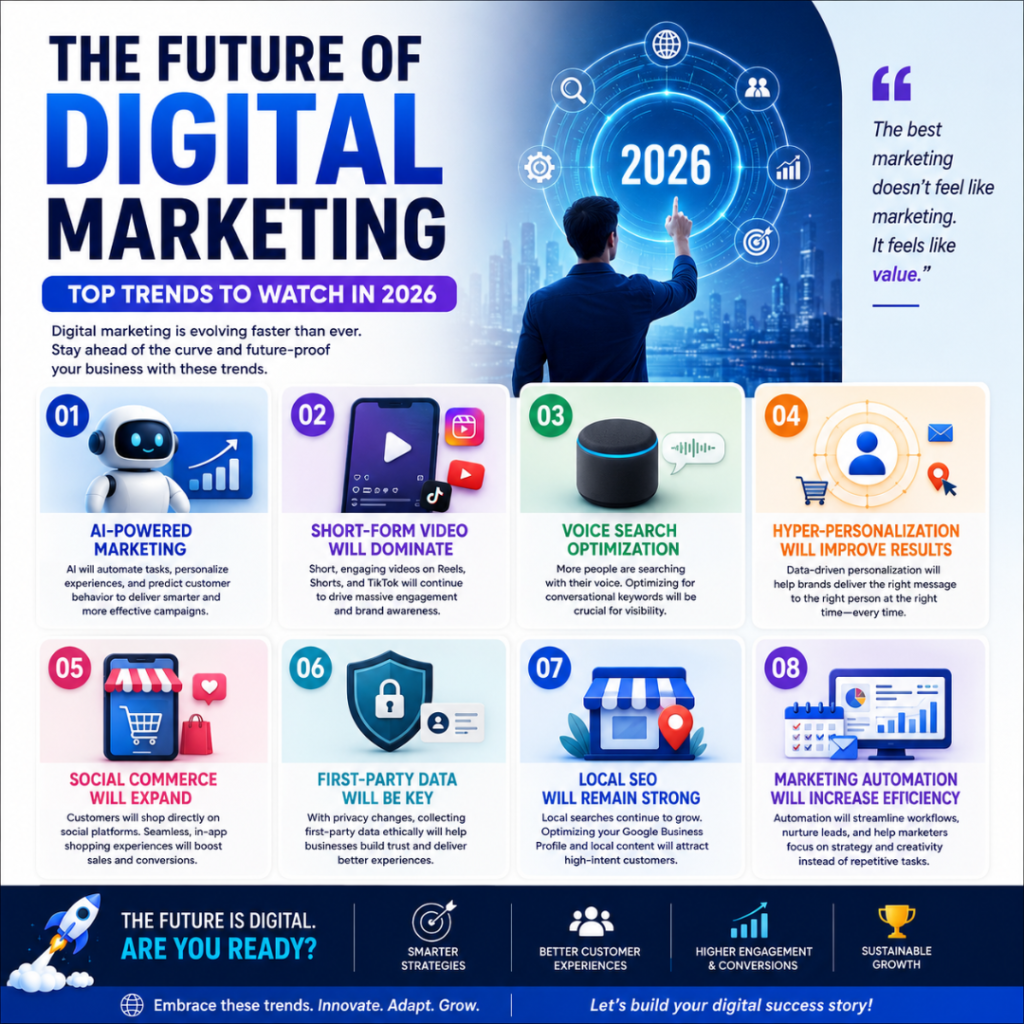
The Future of Digital Marketing: Top Trends to Watch in 2026
In today’s rapidly evolving digital landscape, businesses must stay ahead of emerging trends to remain competitive. Digital marketing is no longer just about running advertisements or posting content on social media. It has evolved into a sophisticated ecosystem powered by artificial intelligence, data analytics, automation, and personalized customer experiences.
As we move through 2026, marketers are witnessing significant changes in consumer behavior, technology, and online platforms. Companies that adapt to these trends can improve customer engagement, increase conversions, and build stronger brand loyalty. In this article, we’ll explore the future of digital marketing and the top trends every business should watch in 2026.
Why Staying Updated with Digital Marketing Trends Matters
Digital marketing trends shape how businesses connect with their target audience. Consumer expectations continue to evolve, and brands that fail to adapt risk losing visibility and market share.
By understanding emerging marketing strategies, businesses can:
- Improve customer engagement
- Generate more qualified leads
- Increase conversion rates
- Enhance brand awareness
- Stay ahead of competitors
- Maximize return on investment (ROI)
The future belongs to businesses that embrace innovation and adapt quickly to changing market conditions.
1. Artificial Intelligence (AI) Will Drive Marketing Innovation
Artificial Intelligence has become one of the most influential forces in digital marketing. AI-powered tools are helping businesses automate repetitive tasks, analyze customer behavior, and create highly personalized marketing campaigns.
From AI-generated content to predictive analytics, businesses are using artificial intelligence to make smarter decisions and improve customer experiences.
Benefits of AI in Digital Marketing
- Faster content creation
- Improved customer targeting
- Automated customer support
- Predictive customer insights
- Enhanced campaign performance
Marketers who effectively integrate AI into their strategies will gain a significant competitive advantage in 2026.
2. Short-Form Video Content Will Continue to Dominate
Video marketing remains one of the most effective ways to engage online audiences. Platforms like Instagram Reels, YouTube Shorts, and TikTok have transformed how people consume content.
Consumers increasingly prefer short, engaging videos over lengthy articles or static images. Businesses that invest in video marketing can capture attention quickly and communicate their message effectively.
Why Video Marketing Works
- Higher engagement rates
- Increased social media reach
- Better audience retention
- Improved conversion rates
- Enhanced brand storytelling
In 2026, short-form videos will continue to be a critical component of successful digital marketing campaigns.
3. Voice Search Optimization Will Become Essential
The rise of voice assistants such as Google Assistant, Siri, and Alexa has changed how people search online. Instead of typing keywords, users now ask questions naturally through voice commands.
This shift requires businesses to optimize their websites for conversational search queries and long-tail keywords.
Best Practices for Voice Search SEO
- Use natural language keywords
- Focus on question-based content
- Optimize for local searches
- Improve website speed
- Create featured snippet content
Businesses that embrace voice search optimization will have a greater chance of appearing in voice search results and attracting more traffic.
4. Social Commerce Will Continue to Grow
Social media platforms are becoming powerful eCommerce channels. Consumers can now discover, evaluate, and purchase products directly within social media applications.
Instagram Shops, Facebook Marketplace, and similar features have simplified the customer journey by reducing the steps required to complete a purchase.
Advantages of Social Commerce
- Seamless shopping experiences
- Higher conversion opportunities
- Increased product visibility
- Better customer engagement
- Simplified purchasing process
Businesses that integrate social commerce into their marketing strategy will benefit from increased sales and customer convenience
5. First-Party Data Will Become More Valuable
Privacy regulations and the decline of third-party cookies are forcing marketers to rethink their data collection strategies. First-party data, collected directly from customers, is becoming increasingly important.
Businesses must focus on building trust and encouraging customers to share information willingly through subscriptions, loyalty programs, and valuable content.
Examples of First-Party Data Sources
- Email subscriptions
- Customer surveys
- Website registrations
- Purchase history
- Loyalty programs
Using first-party data responsibly enables businesses to deliver relevant marketing while maintaining customer trust.
6. Marketing Automation Will Increase Efficiency
Marketing automation enables businesses to streamline repetitive tasks such as email marketing, lead nurturing, customer segmentation, and campaign management.
Automation allows marketers to focus on strategy while ensuring customers receive timely and relevant communication.
Benefits of Marketing Automation
- Improved productivity
- Better lead management
- Consistent customer communication
- Higher conversion rates
- Enhanced customer journeys
Businesses adopting automation tools will improve operational efficiency and deliver better customer experiences.
Conclusion
The future of digital marketing in 2026 is being shaped by innovation, personalization, artificial intelligence, and evolving consumer behavior. Businesses that embrace emerging trends such as AI-powered marketing, short-form video content, voice search optimization, social commerce, local SEO, and marketing automation will be better positioned for long-term success.
Digital marketing is no longer optional—it’s a necessity for businesses seeking growth in a highly competitive online environment. By staying informed and adapting to new technologies, brands can create meaningful customer experiences, increase visibility, and achieve sustainable business growth.
The future belongs to marketers who are willing to innovate, experiment, and continuously evolve with the digital landscape.